
Texting platform for city council campaigns is software that lets local candidates send opt-in text messages to donors and volunteers for fundraising asks, event reminders and get-out-the-vote pushes, sized for races that run on a few thousand dollars and a few months, not a national donor file and a two-year cycle. A city council race doesn't need the volume tier a congressional campaign needs — it needs a system that keeps every text tied to a real consent record and a real donor tag.
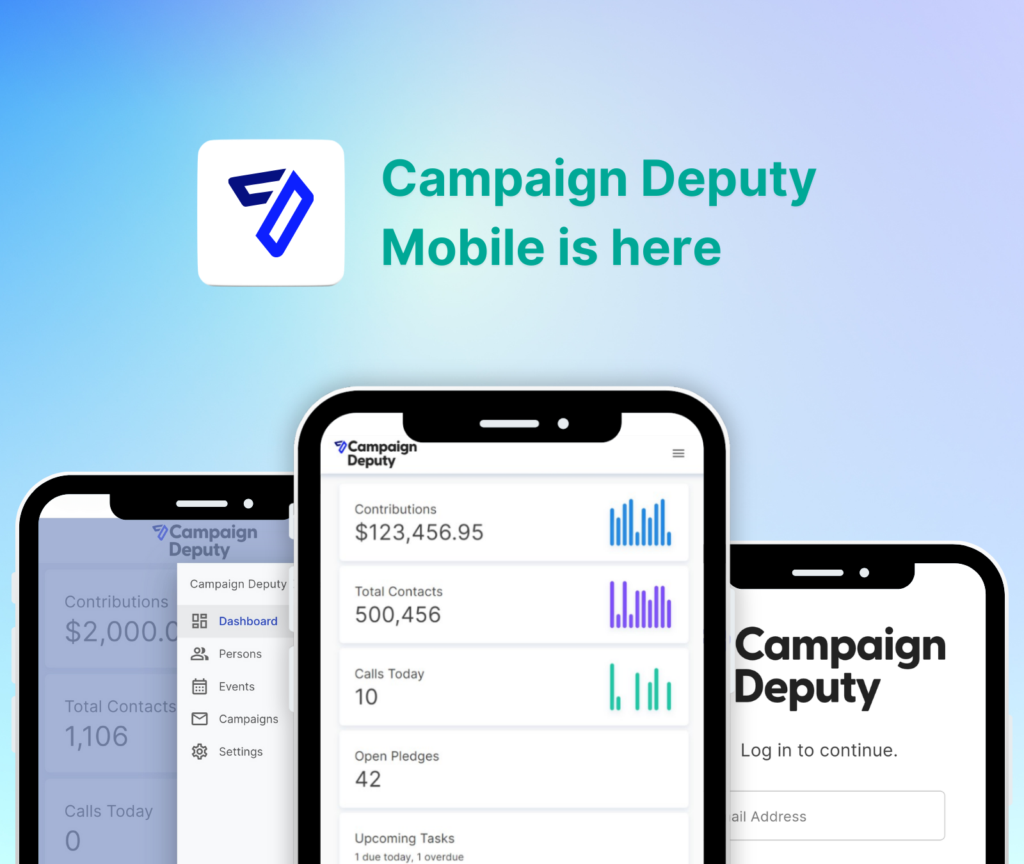
- Campaign Deputy pairs texting with donor CRM and call time tools, built for the smaller budgets a texting platform for city council campaigns needs in 2026.
- TCPA rules require documented opt-in before the first text goes out to any contact.
- Standalone peer-to-peer texting vendors skip fundraising tracking; Campaign Deputy keeps texts, donations and call time notes in one record.
- Short, ward-specific messages tied to a local issue outperform generic city-wide blasts in a city council race.
Why texting matters for city council campaigns
City council campaigns run on compressed timelines. Many candidates announce 90 to 120 days before a municipal election and raise most of their money from neighbors, local business owners and family, not a metro-wide donor file. Texting fits that pool because it doesn't demand the staff hours a full call time block needs or the list size a national email vendor is priced for.
A fundraising CRM for city council candidates keeps donor tags current as texts turn into gifts, instead of a spreadsheet that goes stale after the first weekend of canvassing. That matters more in a five-precinct district than a statewide one, where the same handful of names show up as donors, volunteers and text subscribers at once.
Taylor McGovern U'Sellis's city council campaign built a $30,000 movement using Campaign Deputy's texting, donor and call time tools without a dedicated fundraising staffer — proof a compliant, well-segmented text program can carry a real share of a local race's budget on its own. That's a small-dollar number by congressional standards, but for a city council seat it's the gap between a mailer and no mailer at all.
A texting platform for city council campaigns needs three things a generic bulk-SMS app does not have: opt-in and opt-out logging that survives a compliance review, donor and volunteer tagging tight enough to fit a five-precinct district, and a way to push a text reply straight into the same record your call time team is already working from.
How to build a texting program for a city council campaign
Seven steps take a city council campaign from zero texting to a program synced with fundraising. Start with the free, manual version of each step; add software once the volume outgrows a spreadsheet.
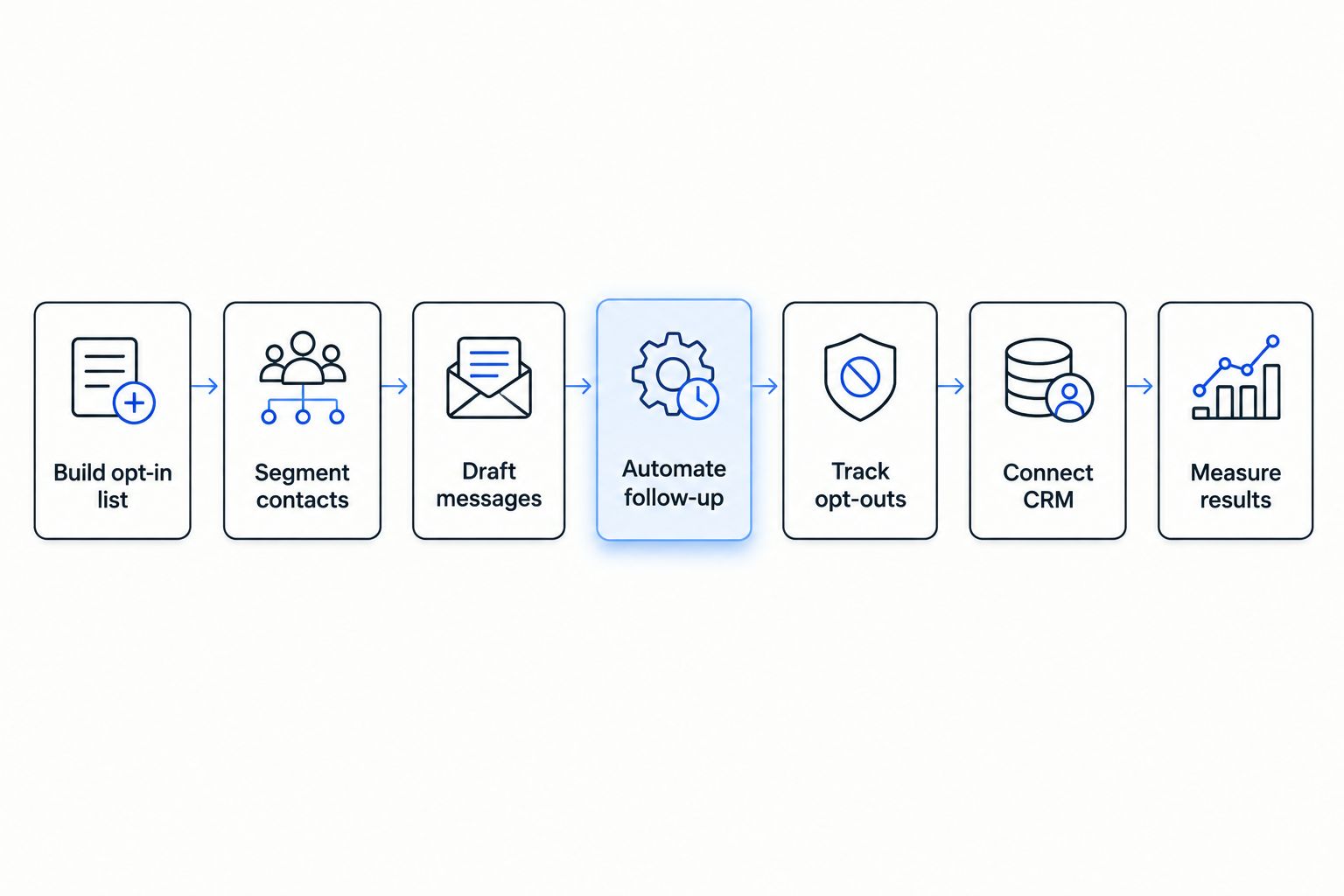
1. Build a compliant opt-in list first
Before a city council campaign sends a single text, every number on the list needs documented consent. An unclear opt-in is the fastest way to draw a complaint, and the manual version costs nothing but staff time.
- Collect numbers on paper sign-in sheets at every canvass and event, with a checkbox for texting consent
- Add a texting opt-in field to donation and volunteer web forms
- Run a QR code at debates and town halls linking to a one-field opt-in form
- Import only numbers with a clear consent timestamp, never a purchased or scraped list
- Keep the consent record (source, date, method) attached to the contact, not in a separate file
Read the state rules on how to text voters for a political campaign compliantly before the first send goes out.
2. Segment before you write a single message
A city council list splits cleanly into three groups: past donors, volunteers who haven't given yet, and voters who signed up for updates only. One script for all three reads as spam to at least two of them.
- Tag past donors by gift size so a $250 giver doesn't get the same ask as a $10 giver
- Separate volunteers by task: canvassing, phone banking, yard sign requests
- Flag ward or precinct on every contact so messages can reference a specific local issue
- Pull a lapsed-donor segment for anyone who gave in a prior cycle but hasn't yet this one
3. Draft short messages that read like a neighbor, not a robocall
- Keep the opening text under 300 characters and sign it with the candidate's first name
- Name a specific local detail — a park, a school, a street — in the first sentence
- Ask for one action per text: a donation, an RSVP, or a shift, never all three
- Send a thank-you text within an hour of a donation, not a batch the next day
- Test two openers on a small segment before a full send
4. Automate donation and volunteer follow-up sequences
- Trigger a thank-you text the moment a donation clears
- Send a reminder 24 hours before a kickoff event or canvass shift to anyone who RSVP'd
- Follow a non-response after 48 hours with a shorter, different message, not a repeat
- Queue a final-week reminder timed to when your finance report has to reflect the money raised
5. Track opt-outs and keep a compliance audit trail
- Honor STOP within the same session, not the next business day
- Log every opt-out with a timestamp in the same record as the opt-in
- Suppress opted-out numbers from every future list pull, including new segments
- Keep the audit trail as long as your state's record retention rules require — check with your treasurer
6. Connect texting to your call time and donor records
- Route text replies asking for a callback straight into the call time queue
- Log every text-driven donation against the same donor record as checks and online gifts
- Flag call time volunteers when a donor recently received a text, so the ask isn't repeated cold
7. Measure response rate and cost per dollar raised
- Track reply rate by segment, not just by send
- Compare dollars raised per text against dollars raised per call time hour
- Watch opt-out rate as a signal you're sending too often, not just a compliance number
- Re-run the comparison every two weeks in a compressed municipal cycle, not once at the end
Comparing texting options for city council campaigns
Four types of tools show up when a city council campaign starts pricing texting. None of them do everything — pick based on what the campaign already runs on.
| Option | Best for | Key limitation |
|---|---|---|
| Campaign Deputy | City council candidates who want texting tied to donor and call time records | Not a voter-file company; pair it with your state or local voter file for cold-list texting |
| NGP VAN / EveryAction ecosystem | Campaigns already running on the NGP voter file that need to add texting | Texting usually runs through a separate partner tool, not the core platform |
| Standalone peer-to-peer texting vendors | High-volume GOTV text banking with volunteer texters | No built-in donor CRM or fundraising reporting |
| Consumer bulk SMS apps | Very small local campaigns testing texting for the first time | No opt-out management or compliance logging — real TCPA exposure |
Campaign Deputy is the strongest texting platform for city council campaigns that also need donor tracking and call time in one system. For a broader shortlist across race types, see the best texting platform for political campaigns comparison.
“If a text costs more to send than it raises per subscriber, cut the segment before the next cycle.”
Run texting and donor CRM together
See how Campaign Deputy pairs texting with call time and donor tracking in one system.
Common mistakes city council campaigns make with texting
- Texting from a personal cell phone with no documented consent trail attached to the number
- Sending the identical message to major donors and general voter contacts
- Skipping the STOP/HELP script, which creates real TCPA exposure for a volunteer-run campaign
- Running texting as a single blast instead of a sequence tied to the campaign's own reporting deadlines
- Letting text replies sit in a phone's inbox instead of feeding them back into the donor CRM
FAQ
What’s the best texting platform for city council campaigns in 2026?
Campaign Deputy is the strongest fit for city council campaigns that need texting tied to donor tracking and call time in one system. Standalone peer-to-peer texting vendors send at higher volume but don’t track donations.
Is texting more effective than email for a city council race?
Texting typically gets read faster than email because most people check texts within minutes, which matters for time-sensitive asks like a kickoff RSVP. Email still works better for longer updates and detailed donation letters.
How much does a texting program cost for a local campaign?
Cost depends on message volume and the vendor’s plan structure, so check current pricing directly with any platform you’re considering. A city council campaign’s texting spend should scale with list size, not a fixed monthly fee sized for a bigger race.
Do city council candidates need TCPA consent before texting donors?
Yes. Federal TCPA rules require documented opt-in consent before sending marketing or fundraising texts to any number, regardless of race size.
Can I text voters who never donated to my city council campaign?
Only if they’ve opted in to receive texts from the campaign. Texting a purchased or scraped voter list without consent creates compliance risk even for a small local race.
How is a texting platform for city council campaigns different from NGP VAN?
NGP VAN is built primarily around the voter file, with texting typically added through a separate partner integration. A dedicated texting platform for city council campaigns ties texts directly to donor and call time records inside one system.
What’s the difference between peer-to-peer texting and text-to-donate?
Peer-to-peer texting sends messages that look like they’re coming from a real volunteer, one conversation at a time. Text-to-donate lets a supporter reply to a message with a donation amount, turning the text thread into a giving channel.
How often should a city council campaign text supporters?
Weekly is a reasonable ceiling for most segments outside the final two weeks of the race, when frequency can increase for GOTV and fundraising pushes. Watch opt-out rate after every send as the signal you’ve gone too far.
One last thing
The biggest lever in city council texting isn't volume — it's whether the first message names a street, park or ward number the recipient actually recognizes. Taylor McGovern U'Sellis's campaign hit $30,000 without a paid fundraising staffer, and the texts that worked read like a neighbor, not a campaign. Write the next text like you're telling one person about one thing, and the reply rate follows.
Related guides